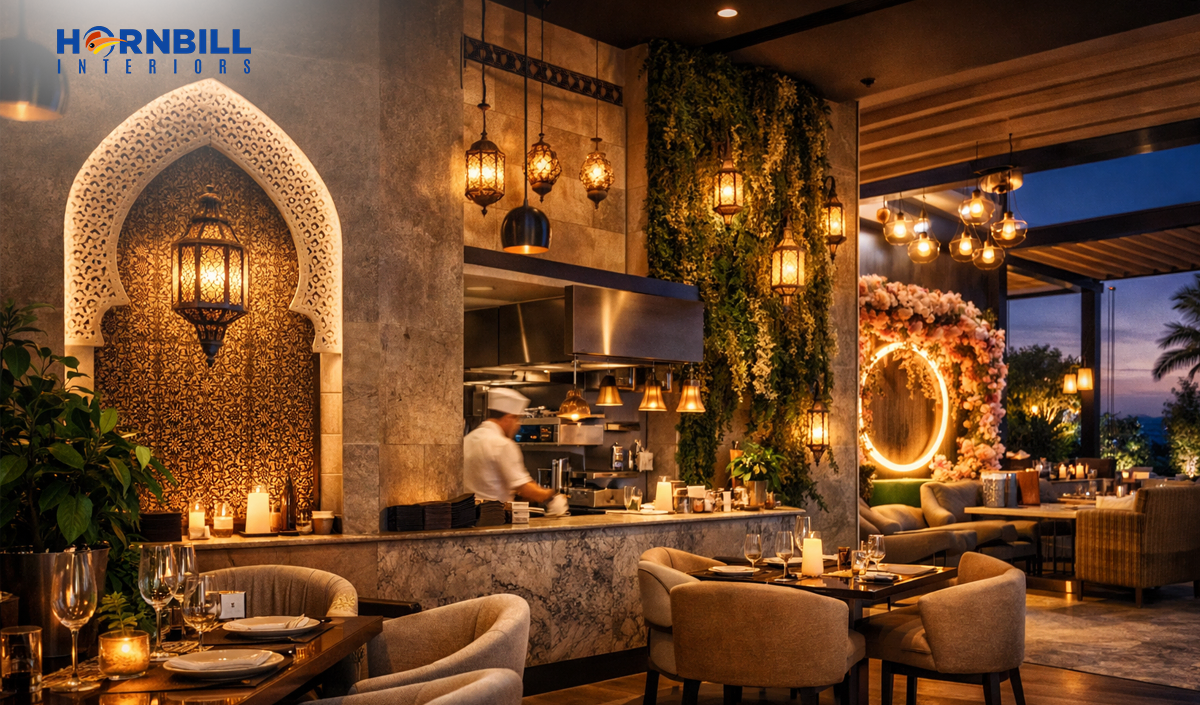
In Oman’s growing hospitality market, restaurants are no longer judged by food alone. Ambience, comfort, layout, and overall experience play a major role in attracting and retaining customers. Whether you’re opening a fine-dining restaurant in Muscat or a casual café in a busy commercial area, interior design directly influences customer perception and business success.
A well-designed restaurant interior not only enhances aesthetics but also improves functionality, staff efficiency, and customer satisfaction. In this blog, we explore practical and strategic restaurant interior design tips for Oman that combine visual appeal with operational efficiency.
1. Understand Your Restaurant Concept First
Before selecting colors, furniture, or lighting, define your concept clearly.
Ask yourself:
- Is it fine dining, casual dining, or fast-casual?
- Is the cuisine traditional Omani, Arabic fusion, Indian, or international?
- Who is your target audience — families, professionals, tourists?
Your interior design should reflect your brand identity. For example:
- ● A luxury fine-dining restaurant requires elegant finishes, premium materials, and ambient lighting.
- ● A family-friendly restaurant may require brighter lighting, durable furniture, and flexible seating.
Design without concept clarity leads to inconsistency and confusion in customer experience.
2. Focus on Smart Space Planning
In Oman, commercial rental costs can be significant. Maximizing space efficiency without overcrowding is essential.
Key Space Planning Tips:
- ● Maintain comfortable aisle spacing for staff movement.
- ● Avoid cramming too many tables into a small area.
- ● Create a natural flow from the entrance to the seating.
- ● Separate dining zones if possible (family area, private area, outdoor seating).
Efficient layouts improve service speed and create a relaxed dining environment.
3. Choose Climate-Appropriate Materials
Oman’s climate is hot and, in some areas, humid. Material selection must consider durability and heat resistance.
Recommended Materials:
- ● High-quality laminates or treated wood
- ● Heat-resistant stone or porcelain flooring
- ● Moisture-resistant wall finishes
- ● UV-protected fabrics for outdoor seating
Avoid materials that warp, fade, or crack due to heat exposure.
4. Lighting Design Matters More Than You Think
Lighting can transform a restaurant’s mood instantly.
Types of Lighting to Consider:
- ● Ambient lighting for overall illumination
- ● Task lighting for dining tables
- ● Accent lighting to highlight décor elements
- ● Decorative lighting for visual impact
Warm lighting creates intimacy for fine dining, while brighter lighting suits cafés and fast-casual spaces.
Well-designed lighting also improves food presentation, making dishes look more appealing.
5. Create Instagram-Worthy Design Elements
In today’s digital world, customers often choose restaurants based on visual appeal.
Adding:
- ● Feature walls
- ● Unique ceiling designs
- ● Artistic installations
- ● Signature décor corners
Encourages customers to take photos and share on social media — providing free marketing for your business.
A small but well-designed feature area can significantly boost brand visibility.
6. Invest in Comfortable Seating
Seating affects how long customers stay and how comfortable they feel.
Consider:
- ● Ergonomic chairs
- ● Proper seat height alignment with tables
- ● Cushioning quality
- ● Flexible seating arrangements
For family-oriented restaurants in Oman, booth seating is particularly popular as it offers privacy and comfort.
Avoid prioritizing aesthetics over comfort — both must go hand in hand.
7. Optimize Acoustics
Noise levels significantly impact the dining experience.
Common restaurant issues include:
- ● Echo from hard surfaces
- ● Loud kitchen noise
- ● Overlapping conversations
To improve acoustics:
- ● Use soft furnishings
- ● Install acoustic ceiling panels
- ● Add wall treatments
- ● Include upholstered seating
Balanced acoustics create a more enjoyable and relaxed dining atmosphere.
8. Design a Functional Kitchen Layout
Restaurant interiors are not just about customer areas — kitchen efficiency is equally important.
A well-designed kitchen layout should:
- ● Minimize staff movement
- ● Separate preparation and serving areas
- ● Ensure proper ventilation
- ● Follow safety regulations
Poor kitchen planning affects service speed and operational efficiency.
9. Incorporate Local Culture with a Modern Touch
Oman has a rich cultural heritage that can be beautifully integrated into restaurant interiors.
Ideas include:
- ● Subtle Omani patterns in wall panels
- ● Mashrabiya-inspired partitions
- ● Earthy desert color palettes
- ● Traditional lantern-style lighting
Blending cultural elements with modern design creates authenticity while maintaining contemporary appeal.
10. Pay Attention to Entrance & First Impressions
The entrance sets expectations.
Key elements:
- ● Clear signage
- ● Attractive façade design
- ● Well-lit entrance
- ● Welcoming reception counter
A strong first impression increases walk-ins and customer confidence.
11. Ensure Compliance with Safety Standards
Restaurant interiors in Oman must meet safety and regulatory standards.
Important considerations:
- ● Fire safety systems
- ● Emergency exit accessibility
- ● Non-slip flooring
- ● Proper ventilation
- ● Electrical load management
Professional interior planning ensures compliance while maintaining design integrity.
12. Outdoor Dining Design
Outdoor seating is increasingly popular, especially during cooler months.
Design considerations:
- ● Shade structures or pergolas
- ● Weather-resistant furniture
- ● Proper outdoor lighting
- ● Cooling solutions such as mist fans
A well-designed outdoor dining area can significantly increase seating capacity and revenue.
13. Balance Aesthetics with Maintenance
Choose finishes and materials that are easy to clean and maintain.
Restaurants experience:
- ● Food spills
- ● Heavy foot traffic
- ● Frequent cleaning cycles
Durable materials reduce long-term maintenance costs and preserve appearance.
14. Align Interior Design with Branding
Interior design should reflect:
- ● Logo colors
- ● Brand personality
- ● Target market positioning
Consistency across interiors, menu design, and marketing creates a strong brand identity.
Final Thoughts
Restaurant interior design in Oman is not just about visual appeal — it is a strategic business investment. A well-planned interior:
- ● Enhances customer experience
- ● Increases repeat visits
- ● Improves staff efficiency
- ● Strengthens brand perception
- ● Boosts profitability
From smart space planning to climate-appropriate materials and cultural integration, every design decision should align with your concept and operational goals.
If you are planning to open or renovate a restaurant in Oman, choose Hornbill Interiors for professional restaurant interior design solutions in Muscat. Our expert team combines creativity, functionality, and industry knowledge to create dining spaces that are both visually stunning and operationally efficient. Contact Hornbill Interiors today to transform your restaurant vision into reality.